
Clash detection and MEP coordination exist to move problems from the site to the screen, where they cost hours instead of weeks. On Saudi projects, where programmes are tight and MEP systems are dense, the gap between a coordinated model and an uncoordinated one shows up in rework, change orders and late handovers.
This article looks at what the research says rework costs, what it says about delay in the Kingdom, and how to set up coordination so it catches clashes early.
How much does rework cost?
There is no single Saudi figure we could verify, so we rely on international studies and say where they come from:
- Bad data and miscommunication. A 2018 survey by FMI and PlanGrid of nearly 600 construction leaders found that miscommunication and poor project data accounted for 48% of all rework on US jobsites, at a potential cost of USD 31.3 billion a year. Team members spent more than 14 hours a week on average dealing with conflict, rework and other issues.
- Coordination problems. Dodge Construction Network reported in September 2024 that 98% of US and Canadian contractors had projects with serious quality issues in the previous three years, and that coordination issues led to an average 9% budget increase.
- Industrial projects. Construction Industry Institute benchmarking, recorded by NIST, put field rework above 3% of construction-phase cost on heavy industrial projects.
These are North American numbers and the Saudi market differs. The pattern still holds: a large share of rework starts as information that was wrong, late or never shared.
Why do Saudi projects run late?
The most cited Saudi study, by Assaf and Al-Hejji of King Fahd University of Petroleum and Minerals, surveyed time performance on different types of large construction projects in Saudi Arabia. Of 76 projects studied, 45 were delayed. The abstract also reports that 70% of projects experienced time overrun, so the two figures in the paper do not match exactly. The authors identified 73 causes of delay, and the most common cause named by owners, consultants and contractors alike was the change order.
The study dates from 2006, and the industry has changed since. But change orders still drive delay, and many change orders are coordination failures found late: a duct that does not fit, a beam that blocks a pipe route, a ceiling that has to drop. Each one found on site becomes a change, a delay and often a claim. Our contracts management team sees the end of that chain; our coordination team works to stop it at the start.
What is clash detection, exactly?
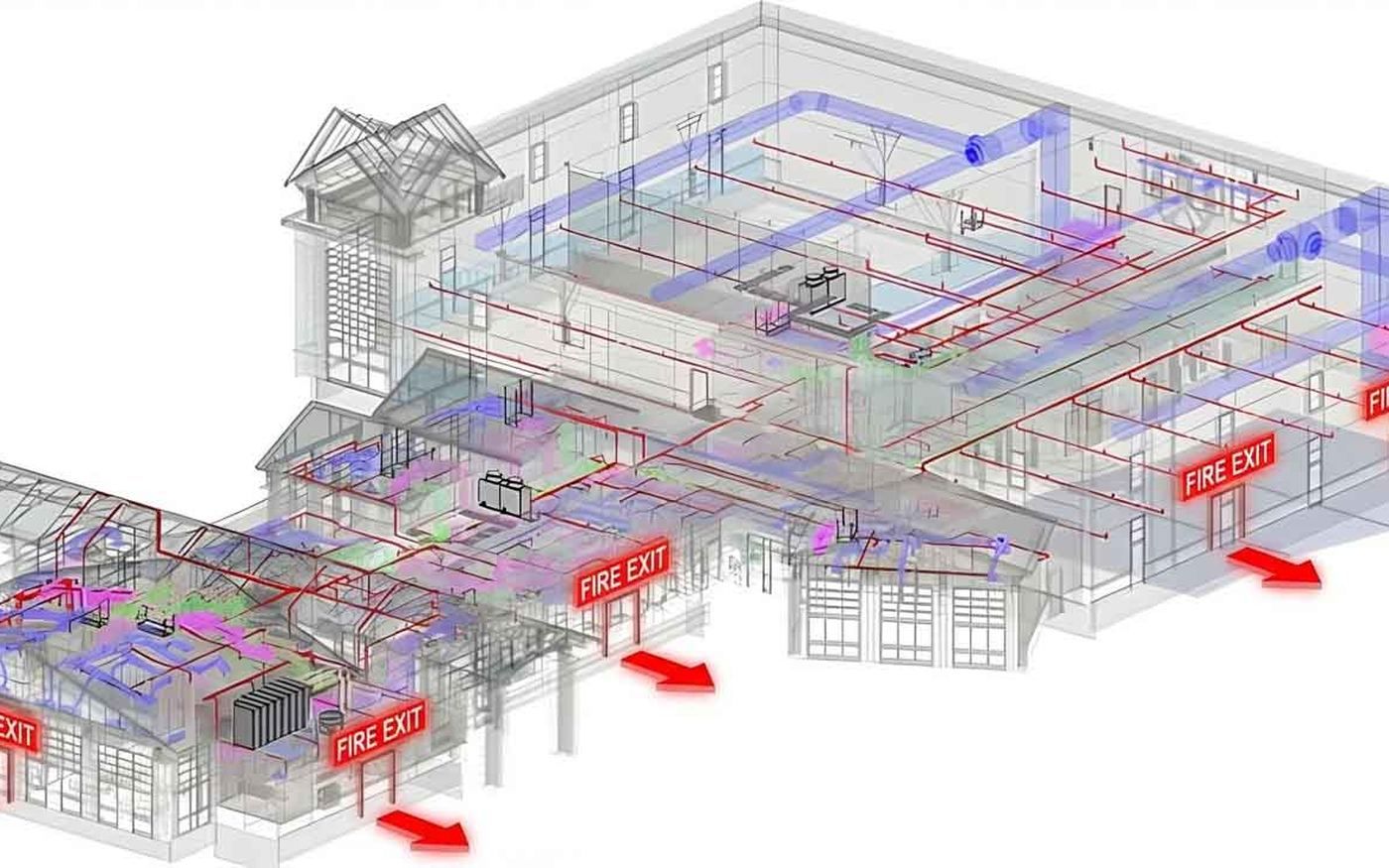
DefinitionClash detection is the automated testing of a federated BIM model, with every discipline's model combined, to find elements that conflict. Software finds the conflicts; a coordination team decides how to resolve each one and who changes their model.
Three types of clash matter:
- Hard clashes: two elements in the same space, such as a pipe through a beam.
- Clearance clashes: elements too close for insulation, access, maintenance or code clearances, such as a valve with no room to turn its handle.
- Workflow clashes: conflicts in sequence or timing, found when the model is linked to the programme in 4D.
Why does the model's LOD matter for clash detection?
A clash test can only find what the model contains. At LOD 300, a duct has its size and route but no hangers or flanges. BIMForum created LOD 350 to model the supports and connections needed for trade coordination, and that is where many real clashes first appear. Coordinate MEP at LOD 350, then develop to LOD 400 for shop drawings. Our guide to LOD 300 vs LOD 400 vs LOD 500 explains each level.
A coordination cycle that works
We run coordination as a fixed weekly cycle. The same steps happen every week, whatever the project:
- Models in by a deadline. Each discipline uploads its model to the common data environment by a set day and time. Late models wait for next week.
- Federate and test. The coordinator federates the models and runs the agreed clash test matrix: which disciplines are tested against which, at which tolerances.
- Group and filter. Raw results contain thousands of duplicates. Group them by location and cause, so one routing decision closes fifty clashes.
- Assign owners and dates. Every issue gets one responsible discipline and a target date. An issue with two owners has none.
- Meet on the model. Review open issues on screen with all disciplines, decide, and record the decision against the issue.
- Measure. Track open, new and closed issues by area each week. If an area is not converging, escalate it.
Where should coordination start?
Start where space is tightest and lead times are longest. On most Saudi projects that means:
- Plant rooms, risers and shafts.
- Corridors where all MEP services share one ceiling void.
- Electrical rooms on data centres and industrial plants. See BIM for data centres in Saudi Arabia.
- Interfaces between the building and external networks, such as service entries and duct banks.
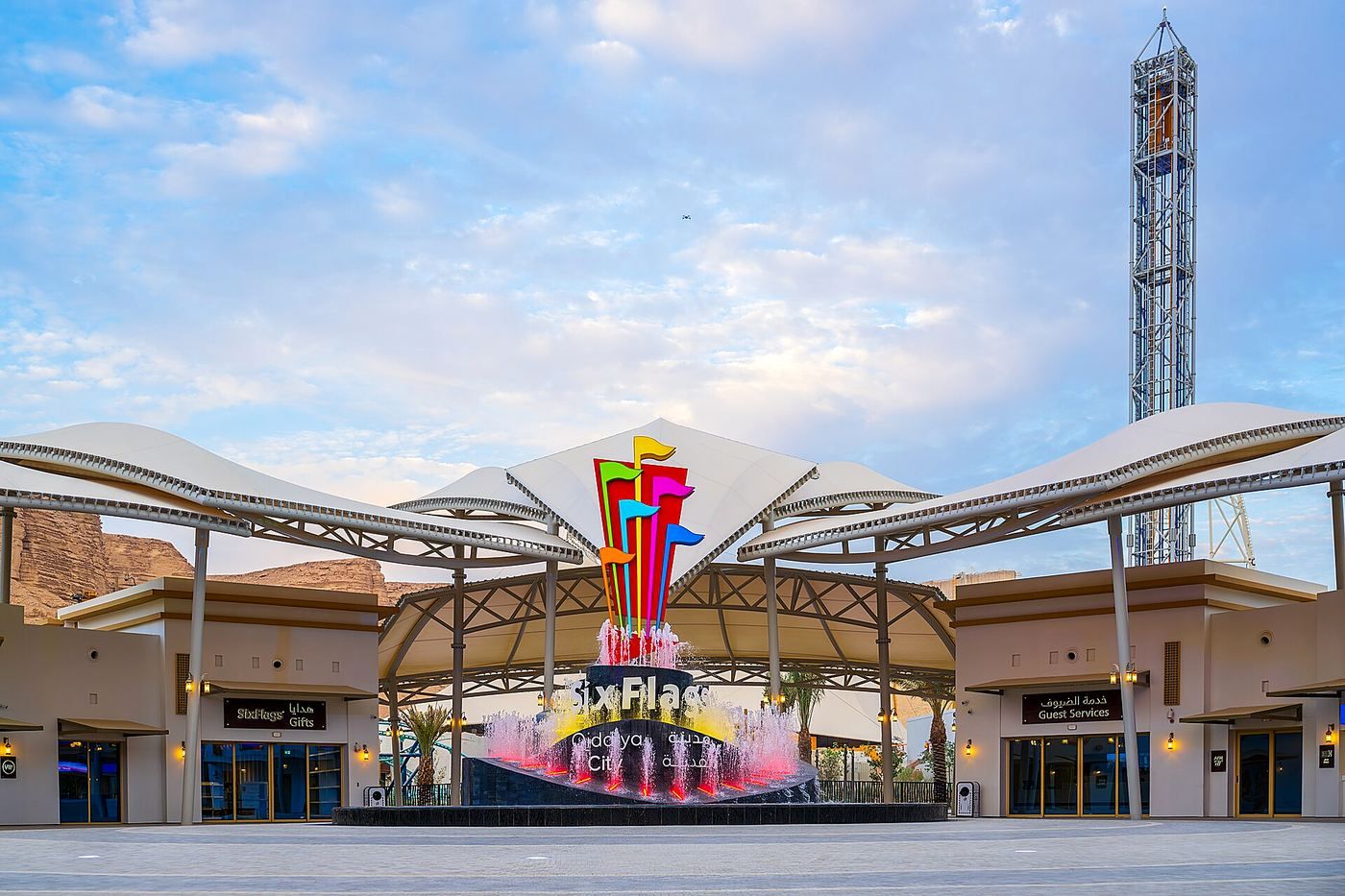
On Gharb Jeddah Hospital for Al Habib Medical Group, AIM United moved the MEP design from 2D drawings into coordinated 3D BIM, with clash detection across all MEP systems and construction-ready shop drawings. On Six Flags Qiddiya, the coordination covered 94 buildings and the sitewide power and lighting that connects them. Both are in our Saudi BIM case studies.
Does BIM coordination reduce rework?
The evidence points that way, though most published numbers come from contractor surveys. In McGraw Hill Construction's 2014 SmartMarket report on BIM in major global markets, 40% of contractors with very high BIM engagement said BIM had significantly reduced rework on their projects. That is a self-reported figure from experienced users, so treat it as a direction of travel rather than a guaranteed saving.
What we can say from our own work is narrower: clashes resolved in the model do not get built. The value depends on how complete the model is, how fast issues close, and whether site teams install from the coordinated shop drawings.
What should you ask a coordination team?
- Show me your clash test matrix and tolerances for a project like mine.
- At what LOD will each trade be coordinated, and when do you freeze each area?
- How do you report progress: open, new and closed issues by area, every week?
- Will shop drawings come straight from the coordinated model?
- Can you produce quantities from the same model for procurement?
AIM United's BIM coordination, clash detection and quantity take-off team works this way on every project, and our shop drawing team issues fabrication drawings from the coordinated model.
Frequently asked questions
What is clash detection in BIM?
Clash detection is the automated check of a federated model for elements that occupy the same space (hard clashes), sit too close for access or insulation (clearance clashes), or are out of sequence (workflow clashes). Tools such as Navisworks run the tests; people resolve the results.
How often should coordination meetings run?
Weekly works for most building projects during design development and shop drawings. Dense MEP areas such as plant rooms may need two cycles a week while they are being frozen.
Can clash detection remove all rework?
No. It removes the geometric conflicts the model contains. Rework also comes from design changes, late information and site errors. A good model reduces the coordination share of that rework; it does not remove the other causes.
Want clashes closed before they reach site?
AIM United runs weekly multi-discipline coordination with Navisworks clash detection and model-based quantity take-off, from LOD 300 design to LOD 400 shop drawings.
Sources
- PlanGrid and FMI study on construction project data and rework, FMLink (reporting FMI and PlanGrid, Construction Disconnected), 8 August 2018.
- Better coordination on construction projects can improve a contractor's profitability, Dodge Construction Network, 11 September 2024.
- Field Rework Index: early warning for field rework and cost growth, NIST (record of Construction Industry Institute research), May 2001.
- New study claims vast majority of builders now enjoying advantages of BIM, Workplace Insight (reporting McGraw Hill Construction SmartMarket Report), 15 January 2014.
- Causes of delay in large construction projects, International Journal of Project Management, via KFUPM (Assaf and Al-Hejji), May 2006.
- Level of Development Specification, Version 2017 (reprint), BIMForum, 2017.
Links checked on 6 October 2026. Regulations change: confirm current requirements with the issuing authority before you rely on them.
 Written by the AIM United BIM team in Jeddah. AIM United delivers BIM, scan to BIM, digital twins and design-build across Saudi Arabia.